Categories
Uncategorized

Targeted CFP: Pikachu’s Transmedia Adventures: The Continuing Adaptability of the Pokémon Franchise

Abstract deadline: June 10th 2025

In 2026 the Pokémon franchise will celebrate the 30th anniversary of its debut in Japan and the tenth anniversary of its popular worldwide AR cell phone game Pokémon Go. In fact, Pokémon is arguably experiencing something of a resurgence and renaissance within the current cultural moment. When a pop-up Pokémon Centre store was opened in London in 2018 to mark the release of Sword and Shield, queues for entering the retail space frequently had to be closed due to demand whilst product lines regularly sold out daily. In 2019, when the long-running cartoon’s main character Ash Ketchum finally won a Pokémon tournament, major news sites humorously deemed this victory a newsworthy event (Bissett 2019). More recently, a revival in Pokémon card collecting has left retail shelves bare and scalpers running rampant whilst mint-condition ‘graded’ cards have sold for hundreds of thousands of dollars at auction (Koebler 2021). Meanwhile, the games themselves continue to be adapted to Nintendo’s console platforms, with the Nintendo Switch releasing both remakes of previously popular titles (Pokémon Let’s Go! Pikachu and Let’s Go! Eevee, Pokémon Snap) as well as new titles exploring hitherto unknown regions (Pokémon Sword and Shield). Much more than a franchise intended to commercially target and exploit children, the Pokémon franchise represents an enduringly popular intellectual property that continues to attract interest across generations. 

Despite this, in-depth and continuous academic study of this hugely popular intellectual property has been infrequent at best. In fact, the last time that a dedicated collection of essays exploring the franchise in a holistic manner was published was in 2004, with many of the contributors positioning the property as a ‘fad’ whose cycle of popularity was apparently at its end (see Tobin 2004; N.B. the augmented reality game Pokémon Go (Niantic 2016- ) has bucked this trend by generating considerable academic attention – see Kulak, Purzycki, Henthorn and Vie 2019; Saker and Evans 2021). Where Pokémon has attracted infrequent academic discussion, this has occurred in the context of assessing how wider cultural flows from Japan to the West have impacted on children’s media (Allison 2006; O’Melia 2020). What is absent, then, is a volume that takes the Pokémon franchise on its own terms, and which situates the property within a much-changed media environment. Thus, a study is needed which considers Pokémon in terms of multiple contemporary debates within media and cultural studies. These include – but are no way limited to – cultural, technological, and media convergence (Jenkins 2006), discourses of transmediality and media mix (Steinberg 2012; Williams 2020), paratextuality (Gray 2010), licensing and/or (transgenerational) media industries studies (Santo 2015; Johnson 2019), material culture (Geraghty 2014; Bainbridge 2017) and fan cultures (Scott 2019; Stanfill 2019). Whether approached as a transmedia franchise, corporate intellectual property, system offering ludic possibilities, fan community, or otherwise, academic scholarship should better consider how the Pokémon franchise has engaged with, adapted to, and challenged the contours of the ever-evolving transmedia environment.

We have already received several chapters for the collection but seek now to fill gaps on the following topics.

This call for papers seeks abstracts for chapters of approx. 6000 words that explore the following topics:

  • The Industrial development of The Pokémon Company and its corporate relations with Nintendo and other licensed partners.
  • Pokémon and the historical development of media industries studies.
  • Pokémon and its links to music, sound, soundtracks, etc.
  • Pokémon’s status as a Japanese media franchise or example of ‘media mix’

We are especially interested in soliciting chapters featuring non-Western perspectives as well as ones engaging with historically marginalised or underrepresented groups. 

We hope to include work from both established and emerging scholars; junior scholars & graduate students are encouraged to apply.

Please email abstracts of 300 words with an accompanying Author Bio of approx. 200 words to Ross Garner (GarnerRP1@Cardiff.ac.uk)  EJ Nielsen (ejnielsen.ephemera@gmail.com)and Rebecca Williams (rebecca.williams@southwales.ac.uk) by Tuesday 10th June 2025. If accepted first drafts of completed chapters will be due Friday 3rd October 2025.

Categories
Uncategorized

CFP: EastEnders at 40 Special issue of Critical Studies in Television


Queries about this call for papers should be directed to Rebecca Williams or Christine Geraghty.


Call for Papers: Special Issue of Critical Studies in Television

EastEnders at 40: Production, Text & Audiences


In February 2025, the soap opera EastEnders will celebrate its 40th anniversary. Launching in 1985, the BBC series has long been a staple on British television and remains one of the BBC’s flagship productions. Airing storylines focusing on mental health, eating disorders, sexual assault, child abuse, and the stigma surrounding HIV and AIDs, these ‘issue-based stories’ have worked to fulfil the BBC’s public service obligations whilst enabling the show to tackle a range of controversial topics (Franco 2013).

EastEnders has also often been viewed as a barometer for the BBC’s overall success, with discourses surrounding declining audiences and the impact of streaming video on demand services (SVOD) often mapped onto its fluctuating viewing figures. Whilst it is far from attracting 30 million viewers per episode, as it famously did for its 1985 Christmas Day episode, it remains one of the BBC’s most viewed shows, routinely attracting 3 million viewers per instalment.

The show has also been inextricably linked with the BBC’s digital development strategies, with the spin-off series E20 screened on BBC Online via the EastEnders website and subsequently on its youth-oriented BBC3 channel and the digital-only BBC i-player platform. It has also experimented with uploading an entire week’s worth of episodes to i-player, building on the binge-watching model favoured by SVODs such as Netflix, or releasing each day’s episode online at 6am in advance of the 7:30pm television broadcast (with the exception of episodes containing major narrative surprises or twists). 

EastEnders is thus a key television text which demands further critical analysis in terms of its institutional position (McNicholas 2004), representations of a range of identities including class, gender, sexuality, and ethnicity (Geraghty 1991; Dodd and Dodd 2004), and its loyal audiences and fans (Buckingham 1987; Madhill and Goldmeier 2003; Middleham et al 2007; Bell and Deller 2018). This special issue uses the show’s 40th anniversary as an opportunity to reflect on its legacy and contribution to British television from a range of theoretical perspectives and approaches. It thus invites proposals for articles focusing on (although not limited to) the following topics:


·         EastEnders’ history

·         Representations of class and the East End

·         Soap opera as a genre

·         Soap opera and celebrity/stardom

·         EastEnders fandom and fan works

·         Performance and acting

·         Analyses of forms of cultural value

·         Representations of ethnicity and race

·         Gender and sexuality in the series

·         Marketing, promotion and branding

·         The link between EastEnders and the BBC’s digital strategies

·         EastEnders’ international reception and audiences

·         The framing of television anniversaries

·         Place and location/EastEnders tourism

·         Paratexts and spin-offs (e.g. the E20 web series, cast appearances on shows such as Children In Need)

In keeping with the Aims & Scope of the journal, the special issue welcomes work from approaches including production studies and institutional histories, audience and reception studies, theoretical approaches, conceptual paradigms, and analyses of the compositional principles and aesthetics of texts, as well as contextual matters. The issue will be edited by Dr Rebecca Williams with the support of Professor Christine Geraghty as a member of the CST Board of Editors.

Abstracts of up to 500 words and a 250-word bio should be sent to Dr Rebecca Williams at rebecca.williams@southwales.ac.ukby 13 October 2023.

Decisions will be returned by mid-November 2023.

First full drafts of 6000-8000 words (including references) are expected by mid-July 2024, after which they will undergo a fully blind peer review process, with final drafts to be completed by March 2025. The issue is scheduled to be published in the autumn of 2025.

Categories
Uncategorized

American Behavioral Scientist Special Issue

American Behavioral Scientist Special Issue

Fan Controversies

Guest edited by Rebecca Williams and Lucy Bennett

Table of Contents

  1. Editorial: Fan Controversies – Rebecca Williams & Lucy Bennett
  2. Groupies, Fangirls, and Shippers: The Endurance of a Gender Stereotype – Ysabel Gerrard
  3. Campaign Problems: How Fans React to Taylor Swift’s Controversial Political Awakening – Simone Driessen
  4. Can the Celebrity Speak? Controversies and the Eulogistic Fandom of Shah Rukh Khan – Abir Misra
  5. Bigmouth Strikes Again: The Controversies of Morrissey and Cancel Culture – Simone Pereira de Sá & Thiago Pereira Alberto
  6. “The Fans of Michael Jackson v Wade Robson and James Safechuck”: Forensic Fandom and the Staging of a Media Tribunal – Philipp Dominik Keidl
  7. “Hey! Mr Prime Minister!”: The Simpsons Against the Liberal Party, Anti-fandom, and the ‘Politics of Against’ – Renee Barnes & Renee Middlemost
  8. Fans of Q: The Stakes of QAnon’s Functioning as Political Fandom – CarrieLynn Reinhard, David Stanley and Linda Howell
Categories
Uncategorized

SciScreen posts

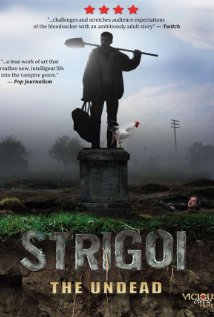
strigoi

I’ve been fortunate to have been invited to speak at a number of events for Cardiff sciSCREEN which is organised by the MRC Centre for Neuropsychiatric Genetics and Genomics (CNGG), ESRC Centre for Social and Economic Aspects of Genomics (Cesagen), and the Wales Gene Park.

My posts about the screenings I’ve presented at can be found on their website via the following link:

Warm Bodies

Strigoi: The Undead

Monstrosity and The Wolfman

Categories
Uncategorized

Going Live: Eastenders and the TV anniversary

EastEnders5

Last week saw the soap opera Eastenders celebrate its 30th anniversary with a week-long series of live episodes. Building on the success of a one-off live episode for the soap’s 25th birthday celebrations in 2010 (which attracted a total audience of 19.9million viewers), the show dedicated five episodes to the live elements of the show. Four of the episodes featured live inserts alongside previously filmed segments whilst the final episode of the week (aired on Friday 20th February) was entirely live. This offered audiences an entire ‘Live Week’ which solved the long-running mystery storyline of who killed the character Lucy Beale. Included alongside the live elements was a flashback episode which revealed Lucy’s killer, whilst the anniversary celebrations also involved spin-off shows such as BBC3’s countdown of the Eastenders character with the most dramatic cliffhangers at the end of the episodes and digital i-Player only shorts ‘Eastenders: Back To Ours’ which features the show’s actors commenting re-watching their classic scenes and commenting on these. The hype around the Live Week has been heavily promoted as the first of its kind in television history. The BBC’s own Eastenders website sees Charlotte Moore, Controller BBC One claimed that “BBC One will mark the 30th Anniversary of its flagship series with the most ambitious week of live television drama ever attempted,” whilst the show’s Executive Producers Dominic Treadwell-Collins promised that “As we celebrate our 30th anniversary, we have set ourselves an enormous challenge – a week of live scenes, a form-breaking flashback, a live episode, story twists that will leave a lump in the throat and a few moments that will elicit genuine gasps from our audience”.

lucy

The Eastenders: Live Week event has much to tell us about contemporary media. It feeds into a current preoccupation with archiving and remembering television’s own heritage and the celebration of anniversaries, whether this is the tenth anniversary of the end of the American sitcom Friends or the announcement of the return of mystery-drama series Twin Peaks in 2016, 25 years after it originally ended. Eastenders is not the only soap to have aired live episodes. The first was Coronation Street which celebrated its 40th anniversary in 2000 in this way and its 50th in 2010, followed by the 40th anniversary of Emmerdale in 2012. As noted above, Live Week is not the first time Eastenders has offered live episodes; in addition to its 25th anniversary it also went live again in July 2012 as part of the London Olympics celebrations with the final seven minutes of an episode devoted to character Billy Mitchell carrying the Olympic Torch through London. The celebration of key soap anniversaries and events highlights television’s own desire to commemorate and mark special occasions. Soap opera is uniquely suited to this type of event since it is ongoing over long periods of time; its routines and schedules mirror the lives of the audiences and events such as Eastenders’ Live Week work to remind audiences of their own lifespans and allow them to reflect on their engagement with these types of serial narrative. BBC3’s companion show ‘Eastenders: 30 Years of Cliffhangers’ offers this type of pleasure by reminding viewers of 100 of the key characters from the soap’s history, allowing them to remember and reminisce about iconic moments from the programme.

However, Live Week also speaks to the importance of television as-it-happens, allowing audiences a sense of shared viewing and a collective experience that has often been thought of as lacking in the era of on-demand television and time-shifting of viewing. Live Week aimed to bring audiences together to watch the narratives of Eastenders unfold together. The promise of shocking revelations made by the production team encouraged viewers to commit to watching the show as it aired; to catch up later on i-Player or the Sunday omnibus exposed viewers to potentially being ‘spoiled’ and seeing information about the episodes before they could watch them, but it also threatened to remove them from the shared experience of viewing at the same time as other members of the audience. This imagined audience of fellow viewers offers the sense that Live Week was an important television event which had to be experienced alongside fellow viewers. Much like media events such as the London Olympics and the Royal Wedding, this shared collective viewing offers unique viewing opportunities and pleasures that the ordinary episodes of Eastenders do not. Live Week was marketed as unmissable, as ambitious and as a unique moment in television history. It is no coincidence that the official hashtag #EELIVE was heavily promoted to encourage viewers to Tweet their reactions as they watched., a strategy that appeared to succeed with the show breaking Twitter records during the reveal of Lucy’s killer.

However, Twitter had offered an ongoing connection throughout the Live Week, allowing viewers to discuss narrative twists and turns and, when actors made mistakes in the live sections of episodes, to comment on these in a humorous fashion. Perhaps most notable was the response to actress Jo Joyner’s slip of the tongue and her on-screen reference to Adam Woodyatt, the actor who plays Ian Beale, rather than the character himself. The #howsadam hashtag demonstrated playful online response to this live mistake:

Alongside the presence of i-Player-only para-texts such as ‘Back To Ours’, the emphasis on social media speaks to the importance of digital technologies in creating and promoting content for contemporary popular TV. It is no longer enough to try to attain high audience figures – and aiming to beat the 19.9 million viewers of Eastenders’ 25th anniversary – but, now, those audiences need to be discussing, reacting, crying and gasping along with one another online as well.


Categories
Uncategorized

Flashback: Television horror and BBC1’s Ghostwatch (1992)

I blogged about this at On/Off Screen blog: https://onoffscreen.wordpress.com/2013/05/29/flashback-television-horror-and-bbc1s-ghostwatch-1992/